Interference Lithography
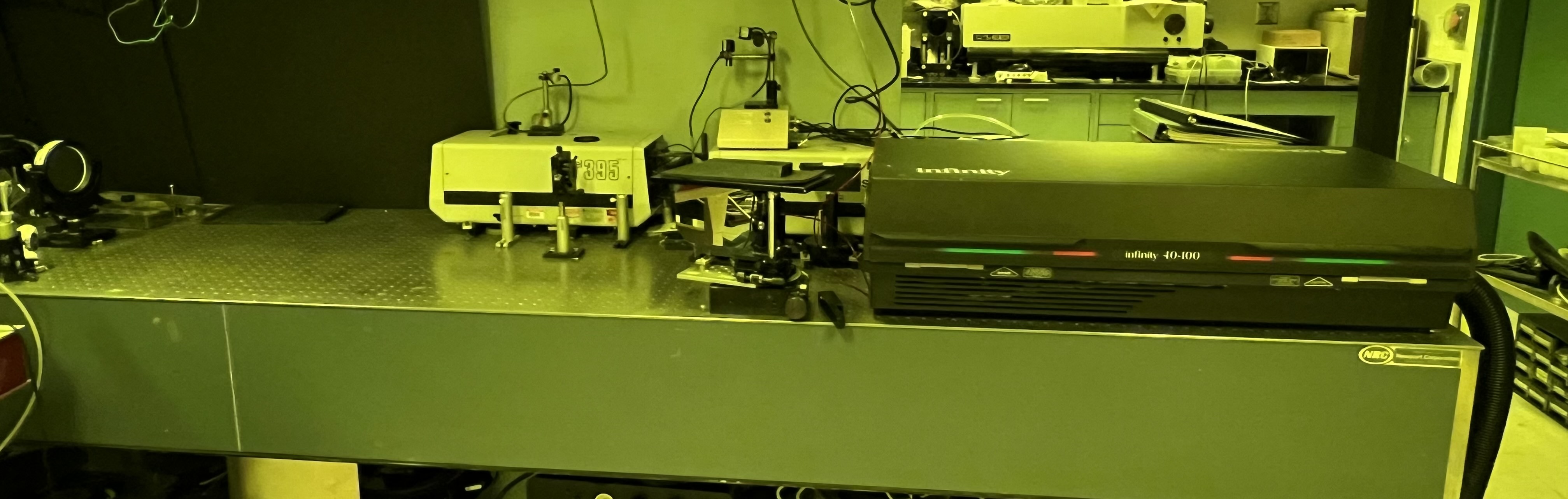
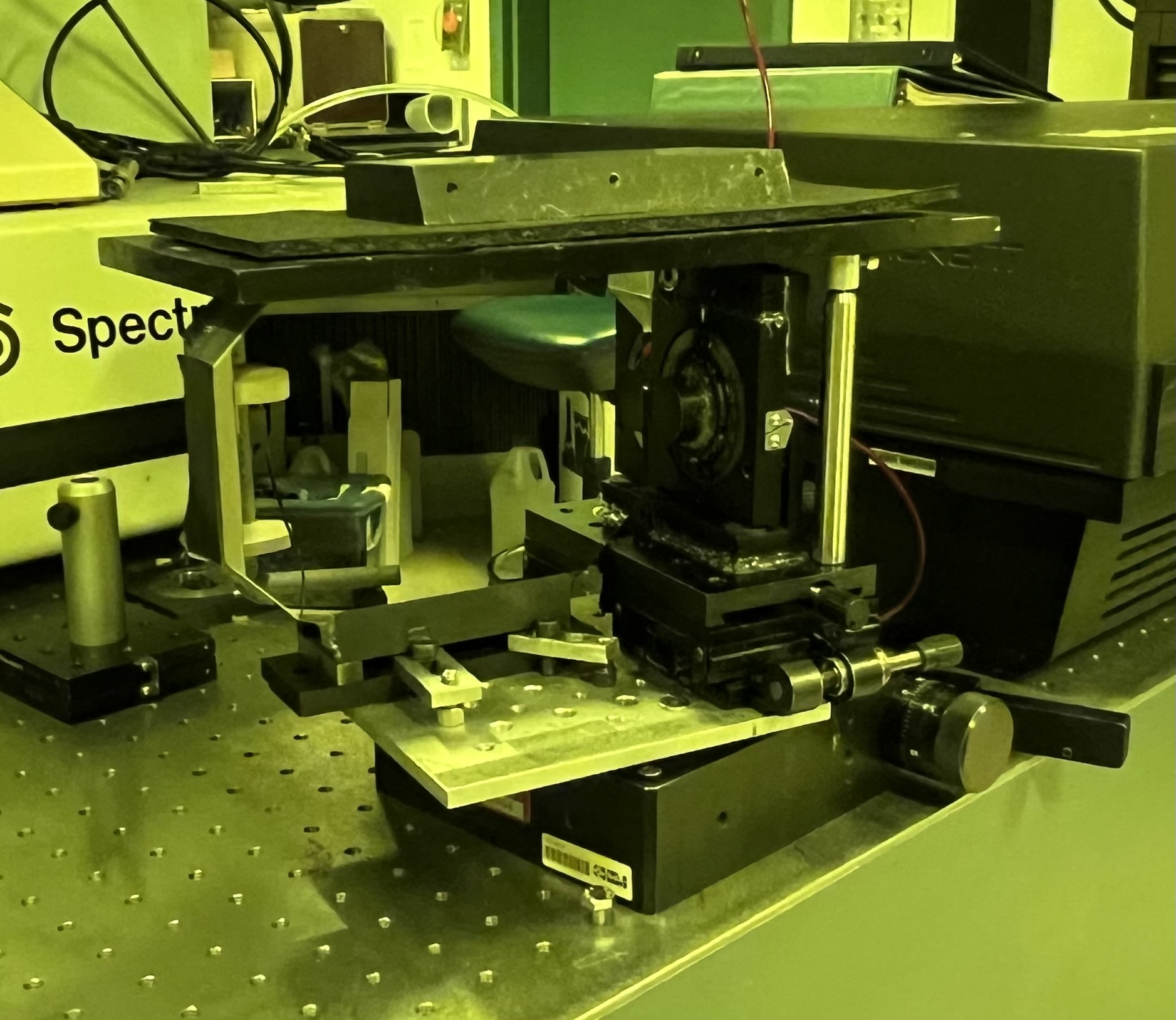
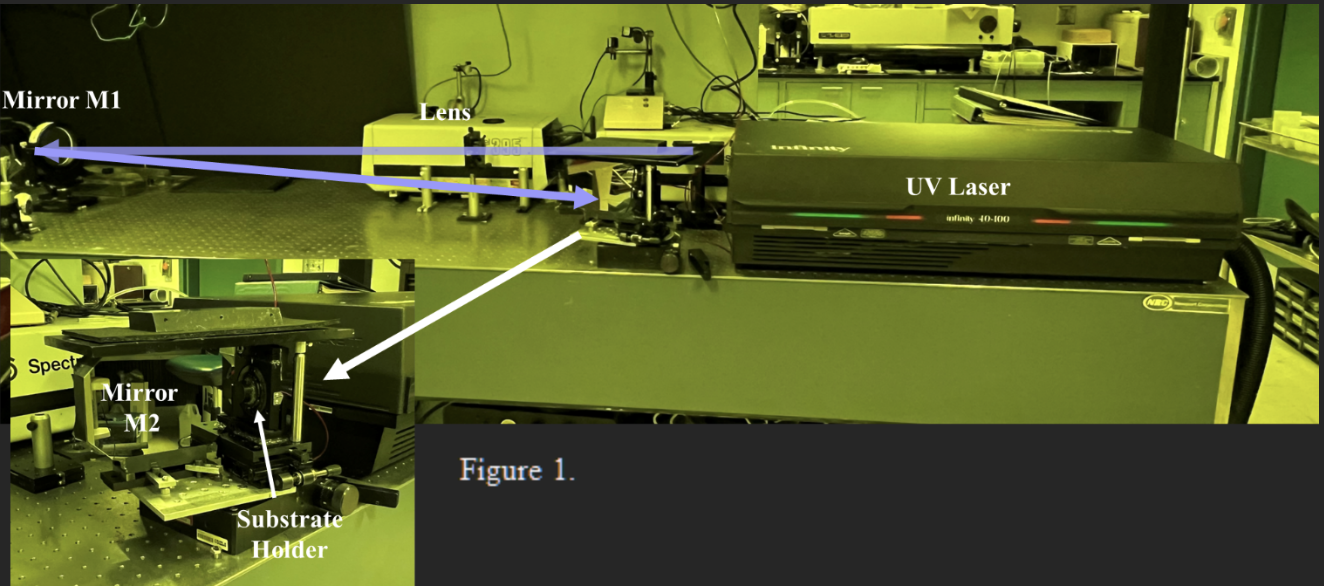 Interference lithography (IL) is the ideal technique for fabricating periodic and quasi-periodic patterns that need to maintain spatial coherence over large areas. The process is conceptually straightforward: two coherent light beams intersect to create a standing wave, which is then recorded in a photoresist (Fig. 1a). The spatial period of the resulting grating can be as fine as half the wavelength of the interfering light, enabling the creation of structures as small as 100nm when using UV wavelengths. Please see below for a schematic of the setup: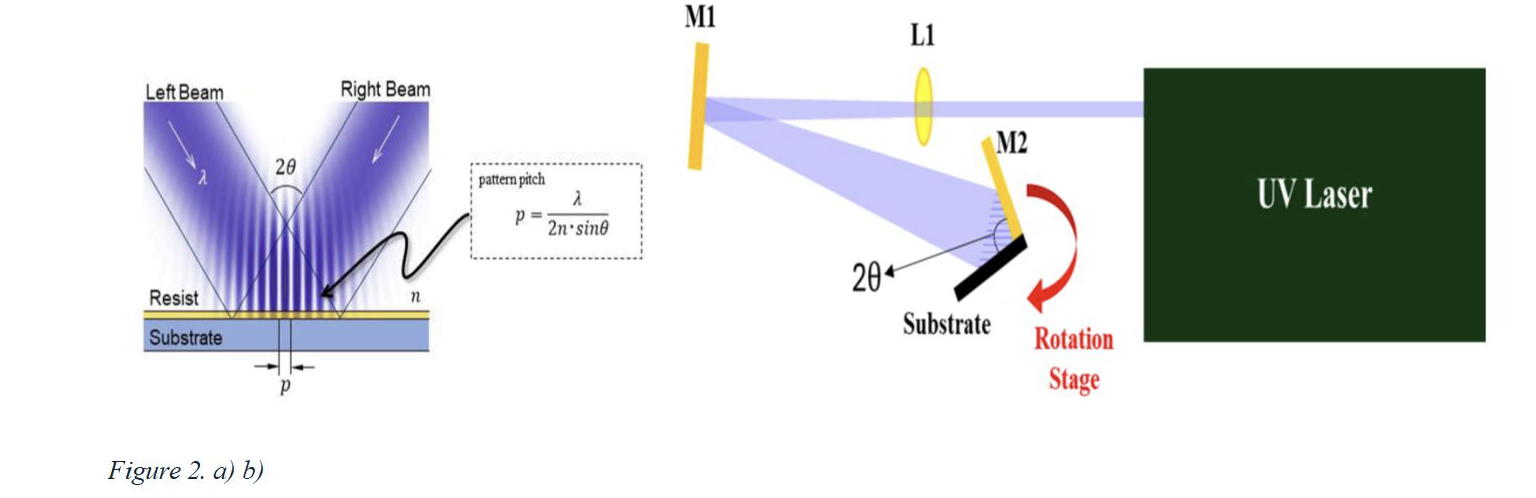
The laser wavelength is 355 nm, theoretically allowing for a minimum pitch of 187.2 nm. However, due to technical challenges, the smallest pitch achieved with this setup has been 200 nm. Reaching this pitch size is quite challenging, with the most efficient pitch size range for this setup being between 250 nm and 1 µm.
To use this setup, you must first schedule a time slot on FOM after completing the required training. Please contact the CHTM NanoFab team to arrange your training session and to gain access to FOM if you do not have access yet.